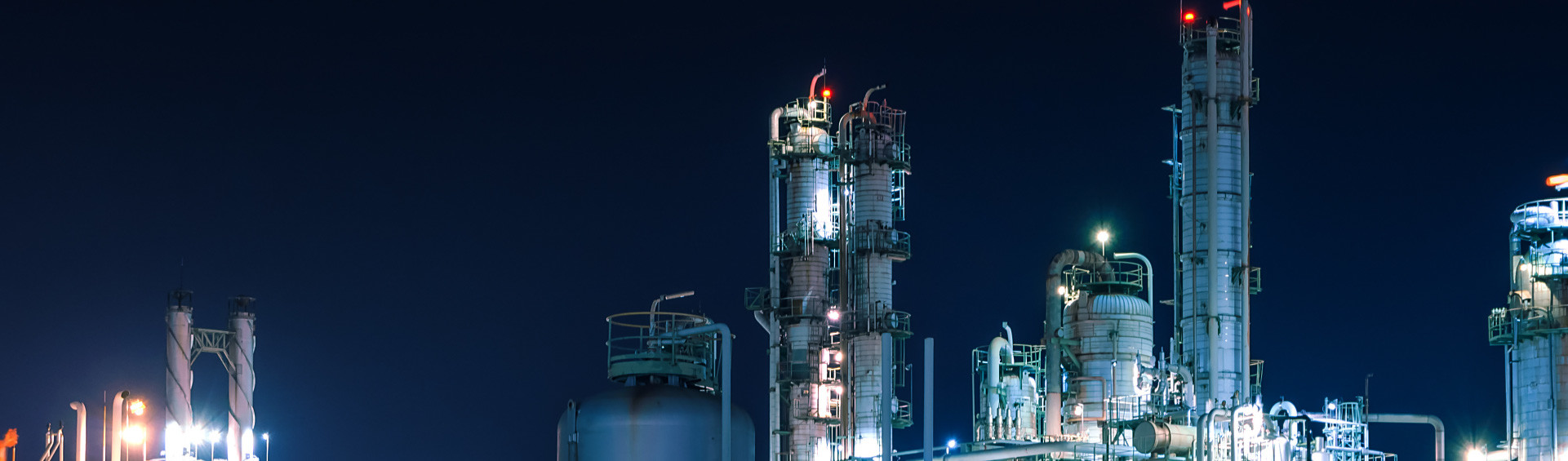

The Offshore Inspection Challenge
On paper, inspection is straightforward. Operators must verify equipment condition, identify corrosion, detect leaks, monitor structural integrity, and gather the information required to keep assets running safely and efficiently. Anyone familiar with offshore production facilities understands that inspections are never as simple as they sound. Offshore inspection often means climbing structures in difficult weather, accessing confined spaces, travelling long distances by helicopter or vessel, and exposing personnel to hazards simply to collect information.
Many critical assets are in areas that are inherently difficult to reach. Inspectors may need to work at heights, enter confined spaces, operate around hazardous gases, or access remote sections of a platform where a simple inspection can become a significant logistical exercise. Every trip offshore involves planning, permits, transportation, weather considerations, and risk assessments. When conditions deteriorate, inspections are frequently delayed or postponed altogether.
The result is that many inspection programs become periodic rather than continuous. Companies receive snapshots of asset condition instead of a complete picture of what is happening over time.
That challenge is becoming even more pronounced as offshore operators face reduced manning, labour shortages, and increasing pressure to improve both safety and efficiency. The industry is beginning to recognize that the real problem is not simply how inspections are performed, but how inspection data is gathered, managed, and acted upon.
Technologies such as inspection crawlers, robotic systems, remote sensors, and AI-enabled data-management platforms can help reduce personnel exposure and improve the frequency and consistency of inspections. However, technology delivers value only when it is properly integrated into the inspection program, supported by reliable workflows, and optimized to turn field data into actionable insight.
The Hidden Cost of Manual Inspection
Manual inspections have served the industry well for decades, but they come with limitations.
Different inspectors may observe different things. Photographs may be taken from different angles. Reports are often generated days after the inspection is completed. Small changes that occur between inspection intervals can easily go unnoticed. Even when inspections are performed correctly, consistency can be difficult to achieve.
The challenge is performing them frequently, safely, and consistently enough to identify developing issues before they become problems.
This is particularly important for corrosion monitoring, leak detection, mechanical integrity programmes, and structural assessments where trends often reveal more than individual data points. A single photograph may show a problem. A consistent stream of inspection data can reveal how quickly that problem is developing and whether intervention is required.
From Human Observation to Autonomous Intelligence
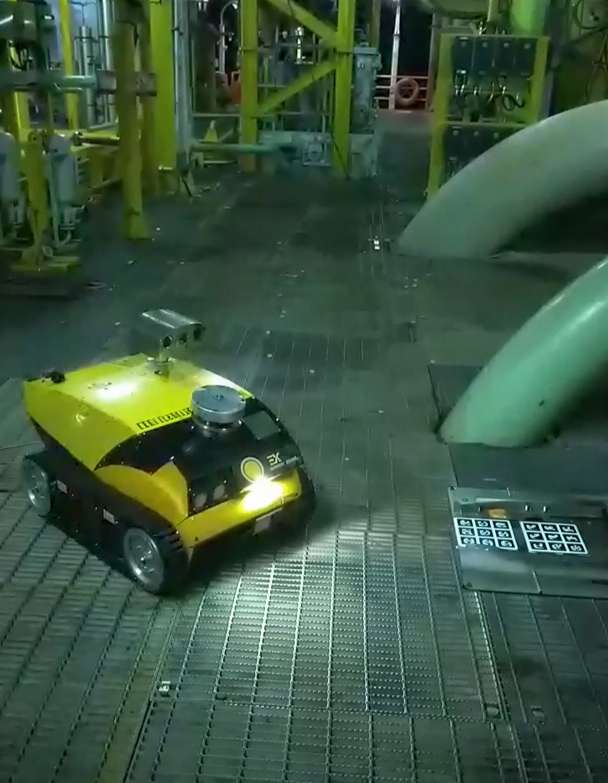
Rather than sending personnel into potentially hazardous areas for routine rounds, autonomous robots can navigate facilities, follow pre-defined routes, collect data, capture imagery, measure process conditions, and report their findings automatically.
The safety benefit is obvious. Every inspection conducted by a robot instead of a person can reduce exposure to transportation risks, confined space entry, hazardous atmospheres, working at heights, and other routine offshore hazards. But safety is only part of the story. The real value comes from consistency.
Unlike human inspections that may vary from day to day, autonomous systems can repeat the exact same route hundreds or even thousands of times. They inspect the same assets from the same locations using the same sensors. That repeatability creates a structured dataset that allows operators to compare conditions over time with much greater confidence.
The difference is similar to comparing a collection of random photographs with a professionally maintained time-lapse record. One provides isolated observations. The other reveals trends.
Better Data Leads to Better Decisions
The offshore industry has no shortage of data. What it often lacks is actionable insight. Modern robotic platforms are increasingly equipped with thermal cameras, optical imaging systems, gas detection sensors, vibration monitoring technologies, corrosion assessment tools, and other advanced inspection capabilities.
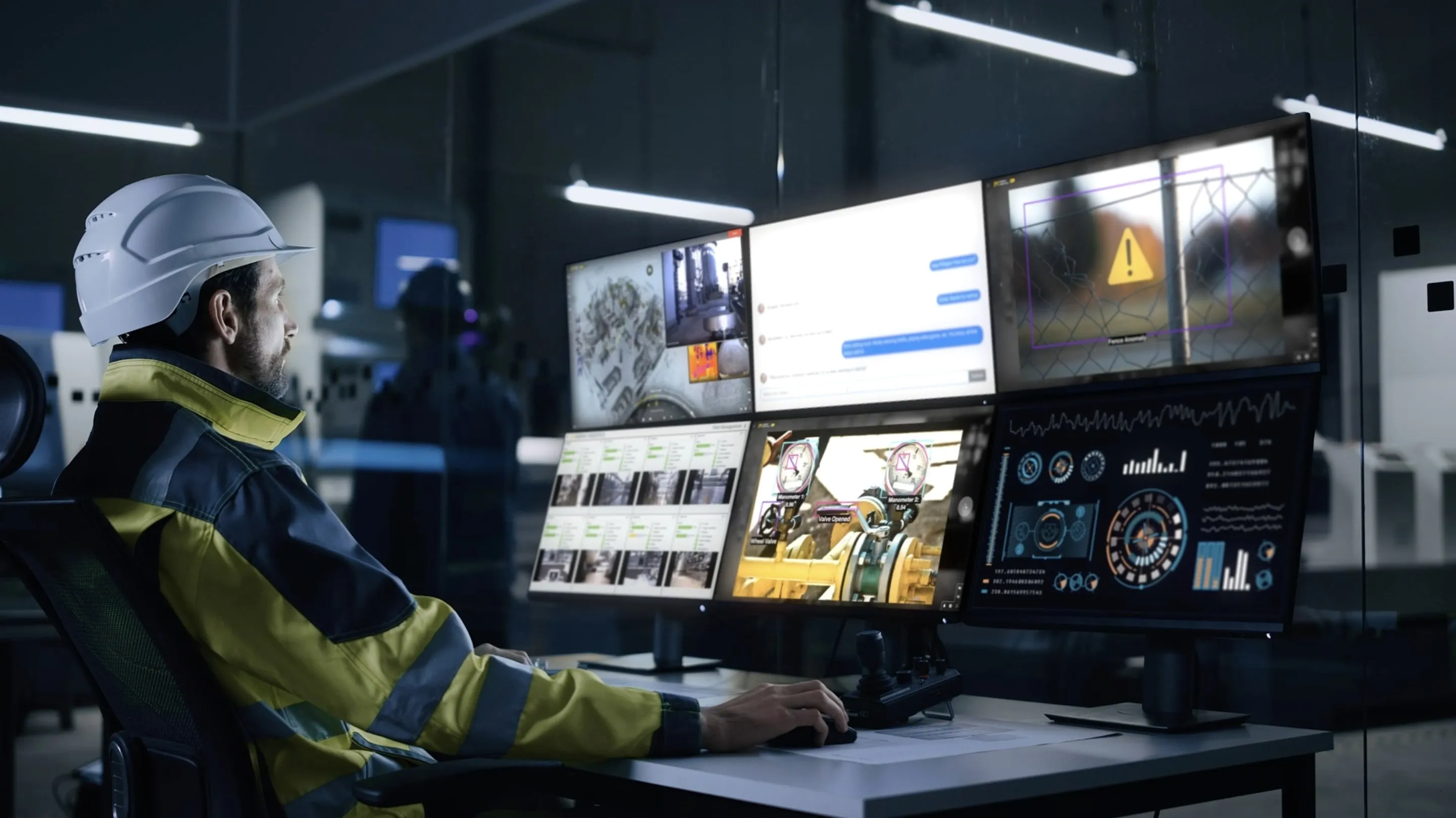
Artificial intelligence is helping turn that information into something useful. AI software can help operators analyze large volumes of inspection data, identify anomalies, and review trends that may require further investigation. Instead of sifting through thousands of images and inspection records, engineers can focus their attention on areas where meaningful changes have occurred.
This shift helps operators move from simple condition observation toward a more proactive approach to asset integrity management.
When Deeper Inspection Is Required
Robots are not replacing inspection specialists. Instead, they are helping them work more effectively. When autonomous systems identify a concern, operators can deploy advanced non-destructive testing techniques such as phased-array ultrasonic testing, corrosion mapping, radiography, eddy current testing, thickness measurements, and remote visual inspection to obtain a higher level of confidence.
This creates a layered inspection strategy. Robots perform frequent monitoring and anomaly detection, while specialised NDT methods provide verification and detailed assessment when required. Rather than inspecting everything all the time, companies can focus resources where they deliver the greatest value.
The Path to Unmanned Offshore Operations
Perhaps the most exciting implication of autonomous inspection is its potential role in supporting unmanned and minimally manned facilities.
Traditionally, when offshore personnel are evacuated because of hurricanes, severe weather, gas incidents, or other operational concerns, routine inspection activities stop. Visibility into asset condition is reduced at precisely the moment operators would prefer more information.
Ex-certified robotic systems offer a compelling alternative. Designed to operate safely in hazardous environments, these platforms can continue performing inspections, collecting data, and documenting conditions even when personnel are not present.
The technology is already proving its value. One example highlighted in a case study presented in Offfshore Magazine in March 2026 was about a Shell deployment involving an Ex-certified autonomous inspection robot operating on an unmanned offshore platform. According to the case study, six months after commissioning the system had recorded 1,997 inspection points, travelled 9.33 km, completed 80% of missions without intervention, and required no physical offshore servicing. For a facility without maintenance facilities on site, maintaining reliable operation while continuing to deliver twice-daily inspection data was particularly significant.
Most importantly, the deployment demonstrated that autonomous inspection systems can provide continuous operational visibility without increasing offshore headcount, an increasingly important consideration as operators pursue safer and more efficient operating models.
The future of offshore inspection is not about replacing people. It is about reducing the need to expose people to unnecessary risk.
As AI, robotics, and advanced inspection technologies continue to mature, offshore operators are gaining the ability to monitor assets continuously instead of periodically, identify integrity concerns earlier, and make smarter maintenance decisions. What began as a conversation about robotics is quickly becoming a conversation about something much larger: creating safer facilities, improving asset reliability, and fundamentally changing how offshore integrity management is performed.
Stay ahead of the technologies reshaping offshore asset integrity. Subscribe to the our newsletter for practical insights on autonomous inspection, AI, hazardous-area technology, NDT, gas detection, and the solutions helping operators improve safety, reliability, and operational efficiency.